

Behold, My Servant
The Sign that Seals
January 31, 2021
Rev. Gabe Sylvia
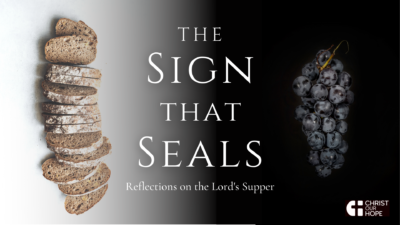
The sermon unfolds Isaiah 53’s portrait of the Suffering Servant (Jesus) whose despised, pierced, and crushed substitutionary suffering secures the New Covenant by the Spirit—clearing our record of sin and calling believers to grateful, obedient living sustained by practices like the Lord’s Supper.
Summary
Using a brief anecdote about learning to appreciate a product by understanding its production, the preacher dives into Isaiah 53 (one of the Servant Songs) to show how hard it is to believe that God’s chosen servant would be despised and yet bear our sins. The ‘arm of the Lord’ imagery points to divine saving power: Jesus, though sinless, chose to wear our wickedness so that by faith we might wear his righteousness. His being pierced and crushed for our transgressions accomplishes peace and justification for all who repent and believe; this atonement demands a response of joyful, thankful obedience rather than disbelief, and practices like the Lord’s Supper and the Spirit’s work in conversion, conformity, and community help us hold fast to the Gospel—concluded with a prayer dwelling on the cost and love of Christ.
Key Points
- Anecdote: appreciating a thing comes from knowing its production process (bagel factory illustration)
- The New Covenant (the Gospel) is unbreakable because the Spirit effects conversion, conformity, and community
- Isaiah 53 is one of the Servant Songs portraying the Messiah; the text is theologically rich and sometimes hard to believe
- ‘Arm of the Lord’ = God’s saving power and authority to judge
- The Servant had no outward splendor; he was despised and turned away from
- Christ bore our sins by choice—sinless yet treated as sinful so we might have his righteousness
- He was pierced for our transgressions and crushed for our iniquities; his suffering brings peace and the clearing of our record
- Atonement is substitutionary: he paid what we owed so our proper response is joyful, thankful obedience, not adding to his payment
- Jesus did not defend himself at his trial, fulfilling the Servant’s role to be stricken in place of the people
- Application: hold fast to the Gospel through the Lord’s Supper and the Spirit’s work; live in grateful obedience
- Closing: prayer acknowledging Christ’s suffering and asking the Spirit to root these truths in believers
The audio description and summary text on this page was generated using AI, please report any errors to office@christouhopechurch.com